
The detail that changes the enquiry.
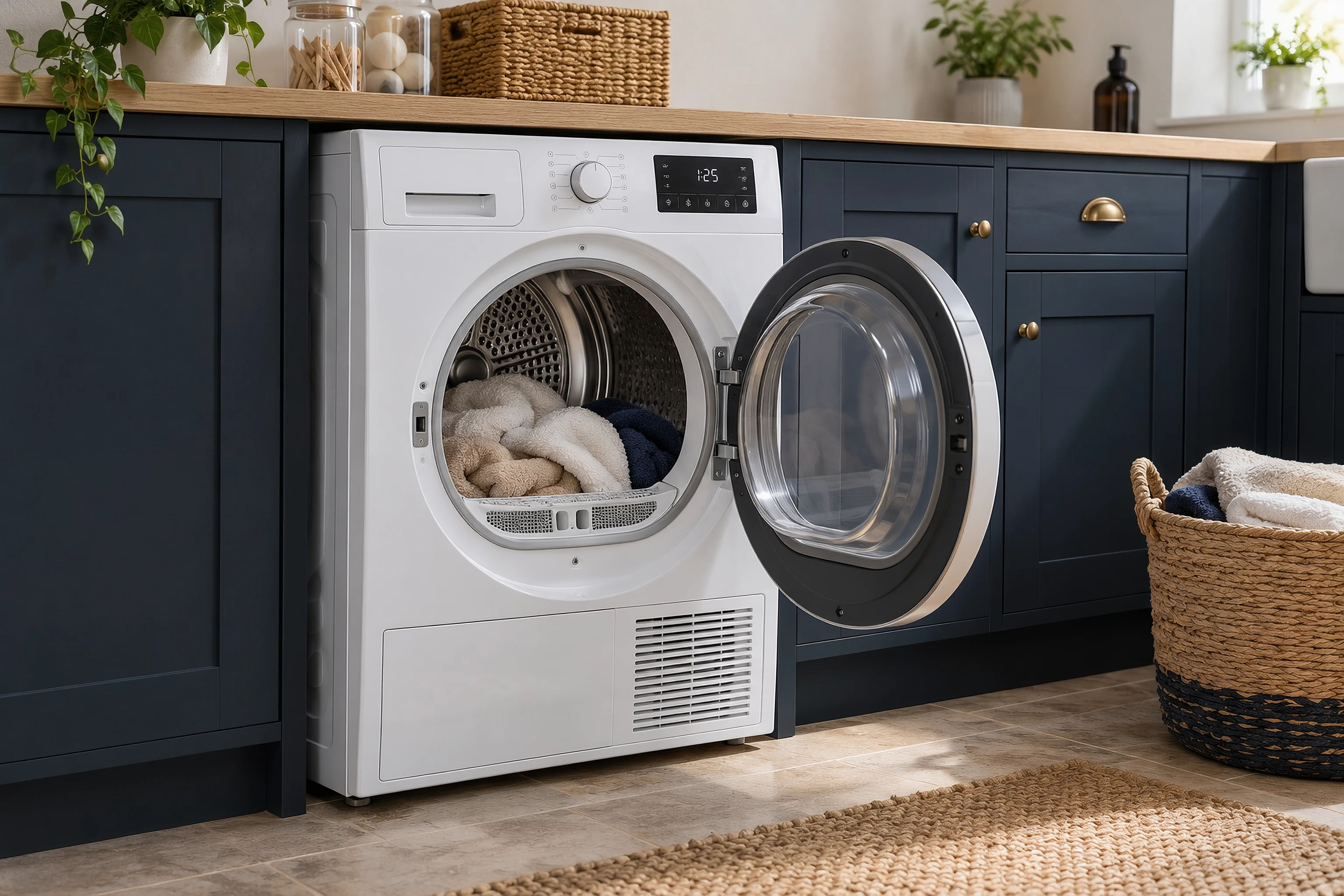
The dryer type matters. Vented, condenser and heat-pump models handle heat and moisture differently.
The drum turns without useful heat
State whether the appliance is vented, condenser or heat pump, then describe the temperature and drying result. The same no-heat description can involve different systems. Follow only accessible user-maintenance instructions in the manual. Stop use if an unusual hot smell develops, and do not repeat long runs to test it.
Drying takes several cycles
Describe the load, programme and condition of the laundry when it came from the washer. Mention whether the longer drying time is new or gradual. User-cleanable filters should be maintained only as the manual explains. Leave enclosed parts alone; prolonged drying does not identify a heating component by itself.
The drum does not turn
Stop the dryer if the drum remains stationary while a sound or heat is present. Tell us whether the display lights and how the attempted start ends. Do not rotate it by hand to assist starting, bypass the door switch or continue repeated attempts. The model and starting behaviour guide the enquiry.
A water-container warning persists
Explain whether the appliance collects water in a container or uses a connected drain. Note when the warning reappears and whether drying begins first. Keep hoses attached and leave internal water-handling parts alone. A container warning is an observation; it does not always establish that the container is simply full.
Keep the limits clear.
We inspect before naming the failed component. The work, visit charge and any proposed parts are discussed with you. Existing equipment only; no new gas installations or LPG conversions. Refrigeration excludes American side-by-side units, compressor replacement and sealed-system work.