
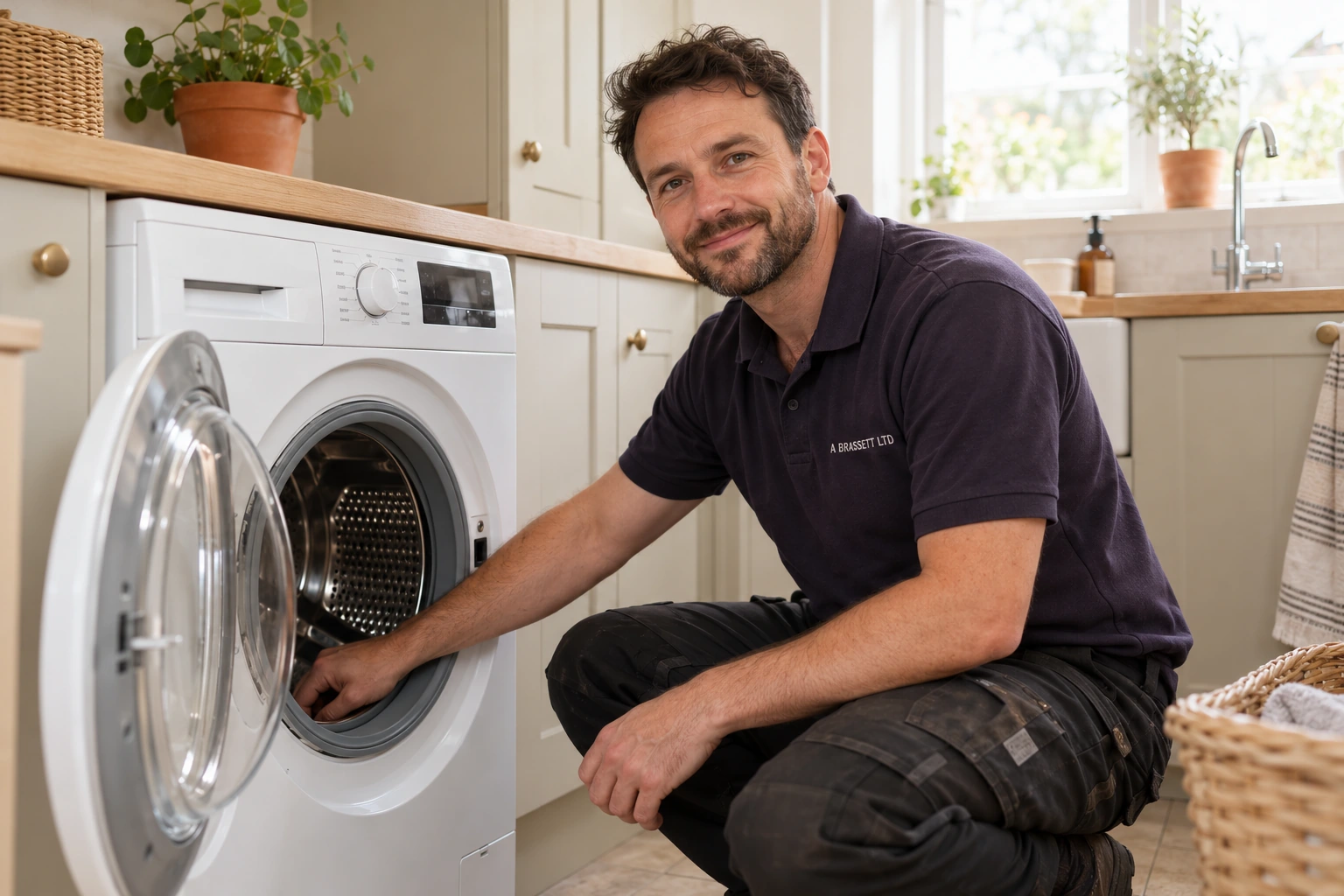
Smeg / Washer dryer / BR2
The wash phase leaves water
Describe whether the machine attempted to empty and whether it reached the spin. Water left during washing can affect the later drying stage too. Keep a water-filled door closed and leave drain connections attached. Record any warning and unusual sound so the enquiry describes the whole interrupted cycle rather than only damp laundry.
Compare this observation: the drum turns unevenly
Identify the operation during which the drum movement changes: washing, fast spin or drying. Different stages can use different turning patterns. Describe a new noise or interruption separately from ordinary reversals. Keep hands clear of a moving drum and do not open the cabinet; the model and stage help make the report useful.
Entry or stairs affect the visit.
Add the floor level, entrance arrangements and route to the equipment. Those details help plan access without assuming a particular property layout.
For the Keston address
Keep the Keston address, complete BR2 postcode and equipment details in one enquiry. A pump fault and an ordinary kitchen-appliance fault need different preparation.
Read the identity, not just the badge.
Quote the complete model and serial or service number from a safely visible label. Similar product names can hide different components. If the label is concealed, leave the appliance in place and tell us the model is unknown.
A manufacturer reference checked on 2026-10-26. Model identity does not confirm parts, stock or repair acceptance.
A useful question for the enquiry
Does “the wash phase leaves water” establish the failed part?
No. Describe that observation separately from “the drum turns unevenly”. Explain whether they began together or at different times, and include the fitting detail: entry or stairs affect the visit. The inspection can then consider the symptoms and safe access together.