
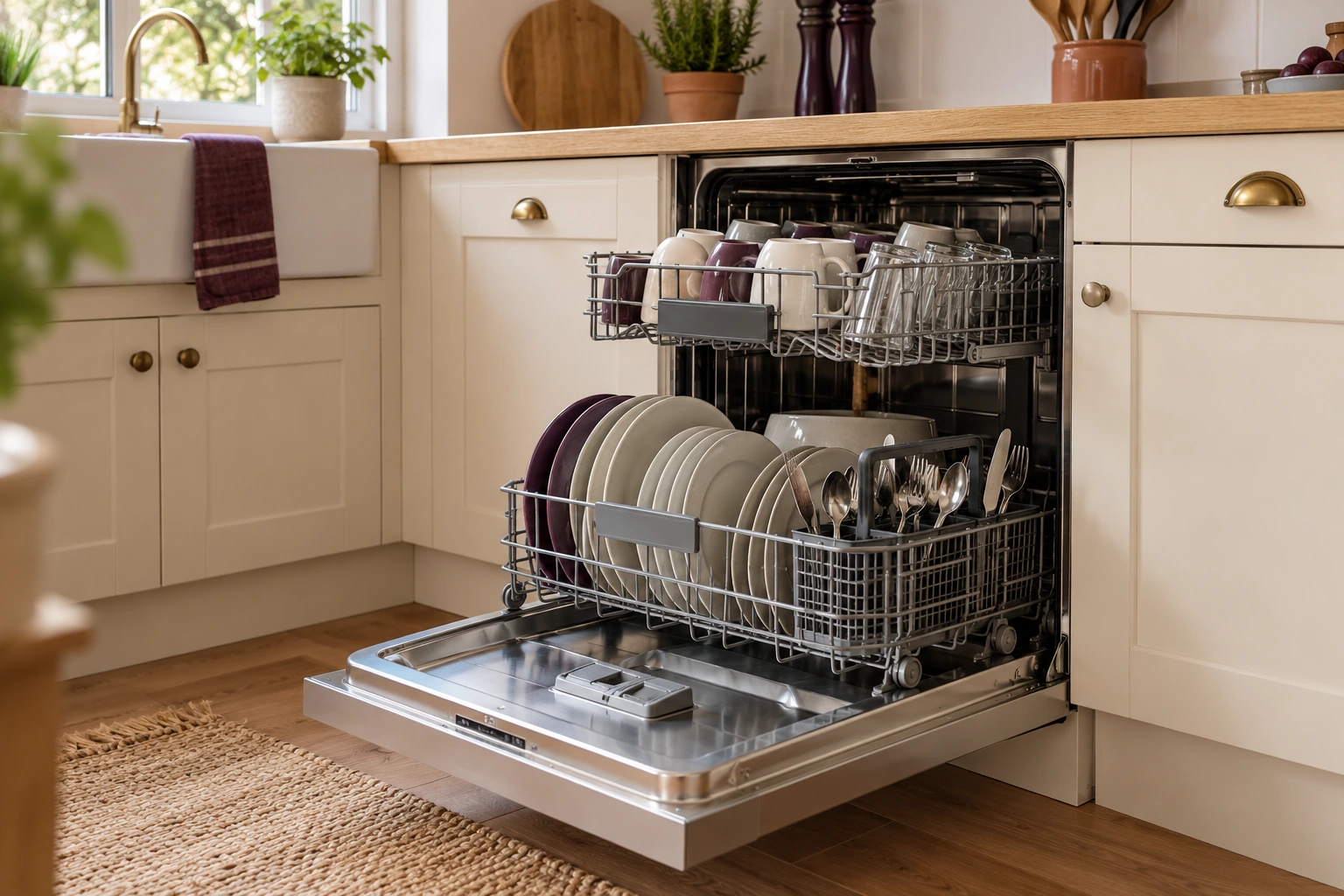
Hoover / Dishwasher / BR3
Water remains after the programme
Tell us whether the programme finished, stopped with a warning or continued making a sound. Describe water above the normal filter area without reaching into unfamiliar parts. Leave an integrated appliance in place and do not tip it to silence a warning. Include whether the kitchen sink is also draining poorly.
Compare this observation: one rack cleans worse than the other
Identify the poorer rack and describe the residue left there. Mention whether the pattern began after changing the loading or fitting taller items. Do not run the dishwasher with an open-door safety device bypassed. A difference between racks helps describe water distribution, but inspection is needed before naming a failed part.
Working room is restricted.
Mention the space around the equipment and anything blocking normal access. Do not drag a machine out, loosen a mounting or disconnect pipework to show the fault.
For the Beckenham address
BR3 is the starting point for Beckenham. Include the full postcode and whether access involves a flat entrance, stairs or fitted cabinetry. Do not move the appliance to prepare a photograph.
Read the identity, not just the badge.
Quote the complete model and serial or service number from a safely visible label. Similar product names can hide different components. If the label is concealed, leave the appliance in place and tell us the model is unknown.
A manufacturer reference checked on 2026-10-26. Model identity does not confirm parts, stock or repair acceptance.
A useful question for the enquiry
Does “water remains after the programme” establish the failed part?
No. Describe that observation separately from “one rack cleans worse than the other”. Explain whether they began together or at different times, and include the fitting detail: working room is restricted. The inspection can then consider the symptoms and safe access together.