
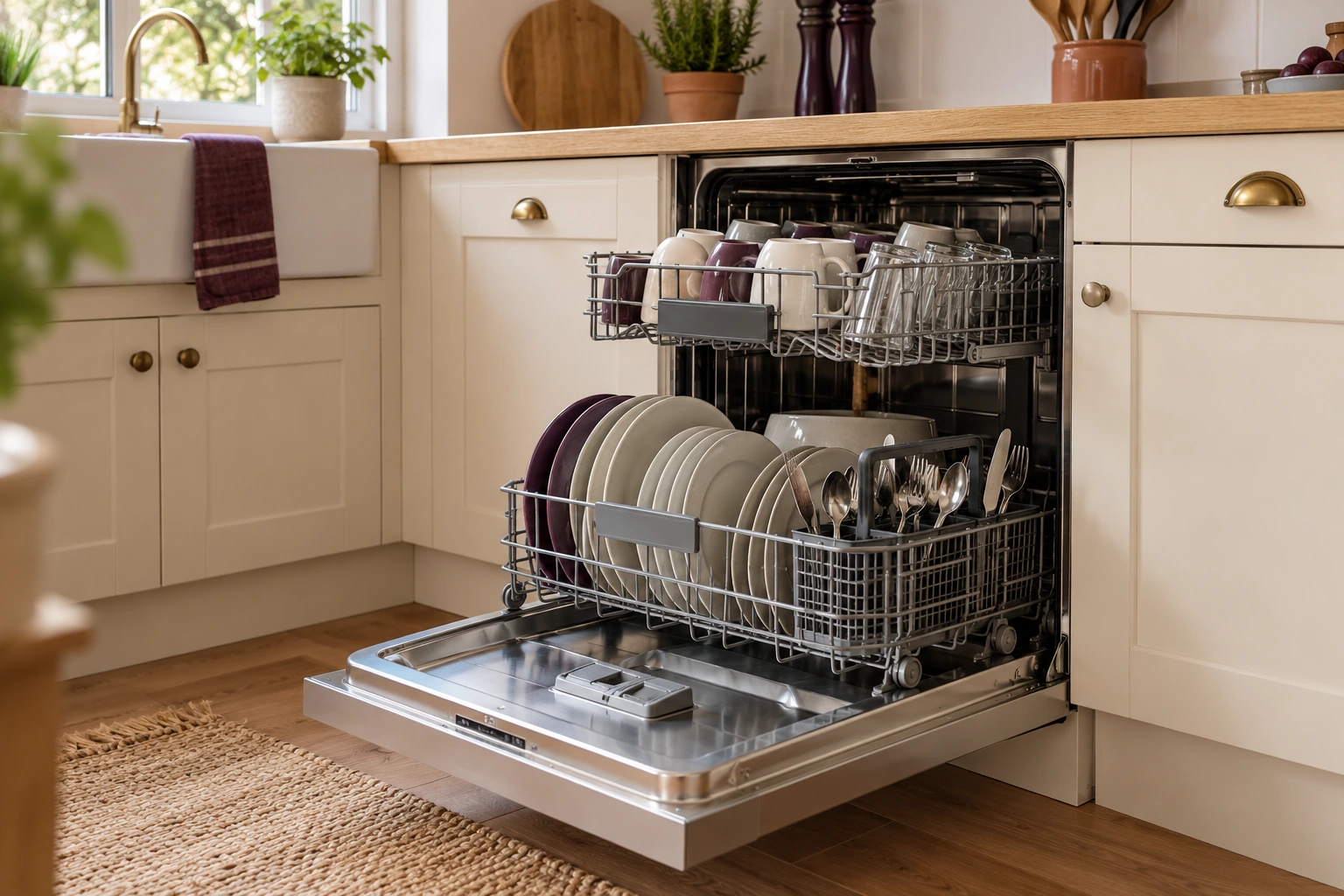
Haier / Dishwasher / BR5
Glasses develop marks
Explain whether the marks are food, a wipeable film or cloudiness that seems part of the glass. Note the detergent and any salt or rinse-aid indication. Avoid adding unfamiliar cleaning chemicals while investigating. A change in wash result needs the programme and model details before a mechanical fault can be assumed.
Compare this observation: the door feels too heavy
Stop using a door that drops unexpectedly or feels unsafe to support. Tell us whether it has a furniture panel and whether the problem involves weight, alignment or catching the plinth. Leave springs and hinges assembled. A model photograph and a view of the closed front help identify the fitting arrangement.
Working room is restricted.
Mention the space around the equipment and anything blocking normal access. Do not drag a machine out, loosen a mounting or disconnect pipework to show the fault.
For the Petts Wood address
Use the complete BR5 postcode for a Petts Wood enquiry. Keep the fault code separate from the model number; the two details identify different things.
Read the identity, not just the badge.
Quote the complete model and serial or service number from a safely visible label. Similar product names can hide different components. If the label is concealed, leave the appliance in place and tell us the model is unknown.
A manufacturer reference checked on 2026-10-26. Model identity does not confirm parts, stock or repair acceptance.
A useful question for the enquiry
Does “glasses develop marks” establish the failed part?
No. Describe that observation separately from “the door feels too heavy”. Explain whether they began together or at different times, and include the fitting detail: working room is restricted. The inspection can then consider the symptoms and safe access together.