
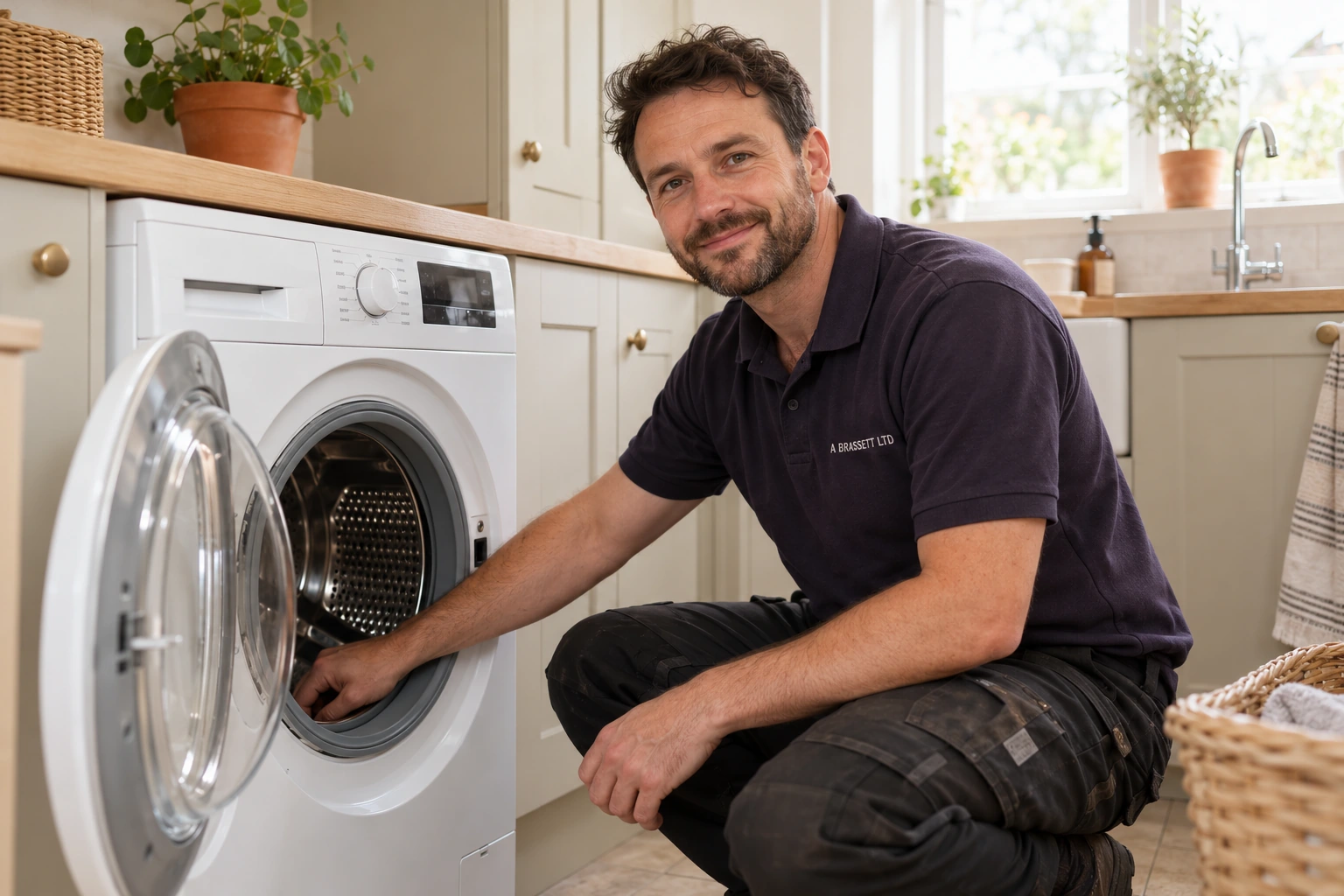
AEG / Washer dryer / BR3
Washing works but drying does not
Keep the washing result and drying result separate in your description. Say whether the drying phase begins, whether the clothes become warm and how the programme finishes. Include the selected combined cycle and approximate load. The drying arrangement belongs to the exact washer-dryer model; it should not be inferred from a separate dryer.
Compare this observation: clothes are warm but remain wet
Tell us the programme used and how much of the washed load was left for drying. Check the model manual for its washing and drying limits, which may differ. Describe whether dampness is new and whether the machine reports a normal finish. Warm laundry alone does not confirm that the drying system is working correctly.
The fitting is behind a furniture panel.
Describe the panel, plinth and visible surroundings. Leave the appliance fitted; photographs and an access description are enough to begin.
For the Beckenham address
BR3 is the starting point for Beckenham. Include the full postcode and whether access involves a flat entrance, stairs or fitted cabinetry. Do not move the appliance to prepare a photograph.
Read the identity, not just the badge.
Quote the complete model and serial or service number from a safely visible label. Similar product names can hide different components. If the label is concealed, leave the appliance in place and tell us the model is unknown.
A manufacturer reference checked on 2026-10-26. Model identity does not confirm parts, stock or repair acceptance.
A useful question for the enquiry
Does “washing works but drying does not” establish the failed part?
No. Describe that observation separately from “clothes are warm but remain wet”. Explain whether they began together or at different times, and include the fitting detail: the fitting is behind a furniture panel. The inspection can then consider the symptoms and safe access together.